

Finding genuinely useful low cost travel destinations for night shift workers requires understanding something that most travel content completely ignores: your relationship with time is fundamentally different from everyone else’s. You sleep when the world is awake. You’re alert when everyone else is winding down. You accumulate days off in clusters that don’t align with traditional vacation windows. And you arrive at any destination already partially jet-lagged before the flight even happens. I worked night shifts in a hospital for four years while traveling every chance I got, and the destinations and strategies that actually worked for my schedule look nothing like standard travel advice. Here is what genuinely helped.
1. Understand How Your Schedule Creates Travel Advantages Nobody Talks About
Before destinations, before booking strategies, before packing lists, there is one reframe that changes everything for night shift travelers: your schedule, which feels like a disadvantage in daily life, creates specific travel advantages that nine-to-five workers never access.
You are available to travel on weekdays when flights are cheapest, hotels are emptiest, and attractions have the shortest lines. You naturally stay up late and wake up slowly, which means you arrive in destinations already calibrated for the evening culture that defines the best experiences in most cities. Restaurants, live music, local nightlife, and the particular quality of a city after dark are things most tourists miss because they’ve been sightseeing since 8 AM and are exhausted by 9 PM. You are not those tourists. Your baseline schedule makes you a better traveler in cities that come alive at night. Recognizing this reframes the entire travel planning process from managing a disadvantage to leveraging a genuine advantage.
2. Medellín, Colombia
Medellín operates on a schedule that suits night shift workers almost perfectly. The city’s social culture genuinely starts around 9 PM. Restaurants fill up at 8. The bar and music scene in El Poblado and Laureles runs until 4 AM on weekends without feeling like the desperate end of a night. For someone whose body clock already runs several hours behind the conventional world, arriving in Medellín feels like finally living in the correct time zone.
Daily costs sit at $25 to $40 covering a clean private room, three good meals, and local transport with room left over. Flights from Miami and Fort Lauderdale on Spirit or JetBlue regularly drop below $180 round trip. The city’s metro system runs efficiently and cheaply. The Botanical Garden is free and genuinely beautiful for slow morning hours when your body thinks it’s still nighttime. The coffee scene is extraordinary. The people are warm without being performatively friendly. Medellín is the destination that night shift workers return from feeling like they finally experienced a city on their own terms.
3. New Orleans, Louisiana
New Orleans is the domestic destination built by and for people who don’t sleep on conventional schedules, and it has been that way for three hundred years. The city’s entire cultural identity is organized around late nights, live music that starts after 10 PM, food available at every hour, and a general social permission to operate outside normal time that exists nowhere else in the United States with the same authenticity.
Frenchmen Street in the Marigny neighborhood has live jazz, blues, and funk starting around 9 PM and running until 4 AM in venues that charge no cover and expect nothing beyond the price of a drink. The French Quarter adds the tourist energy that some people love and others find excessive, but at 2 AM when the tour groups have gone to bed it becomes something genuinely different and genuinely interesting. Café Du Monde serves café au lait and beignets 24 hours a day, which is the kind of practical detail that means more to a night shift worker than it does to anyone else. Flights from most U.S. cities run $100 to $250 round trip. A room in the Marigny or Bywater neighborhood costs $70 to $100 a night. Food budget runs $20 to $30 a day eating at local spots rather than tourist restaurants.
4. Tokyo, Japan
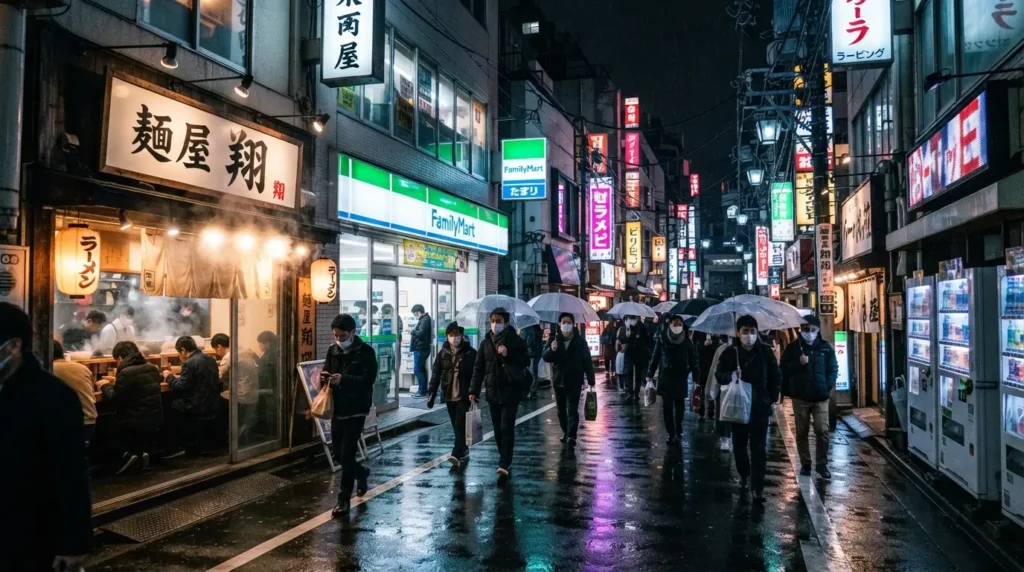
Tokyo is the city that never apologizes for being extraordinary at 3 AM, and that quality makes it one of the best low cost travel destinations for night shift workers who want an international experience that matches their natural rhythm. Convenience stores called konbini, specifically 7-Eleven, FamilyMart, and Lawson, serve genuinely excellent food around the clock. Ramen shops in Shinjuku’s Omoide Yokocho alley are packed at midnight. Shibuya Crossing at 2 AM is quieter than during the day but still inhabited and fascinating. The Tsukiji outer market comes alive before dawn for the freshest sushi breakfast you will ever eat anywhere.
Japan’s reputation for expense is partly deserved and partly myth. Daily costs in Tokyo run $50 to $70 if you eat at convenience stores and local ramen shops rather than destination restaurants, stay in a capsule hotel or budget guesthouse rather than a Western-style hotel, and use the metro rather than taxis. Capsule hotels deserve specific mention because they align unexpectedly well with night shift workers’ sleeping habits. Private pods with blackout curtains, customizable lighting, and white noise environments that block external sound create sleeping conditions that feel more familiar than a standard hotel room to someone whose body is accustomed to sleeping in unusual circumstances.
5. Lisbon, Portugal
Lisbon’s fado music culture and its dinner schedule make it one of the most naturally night-shift-friendly cities in Europe. Restaurants don’t fill up until 9 PM. Fado performances in the Alfama district start around 9:30 or 10 and run until midnight or later. The famous Pink Street and Bairro Alto bar districts are populated until 4 AM on weekends. For someone whose body genuinely prefers being awake after 10 PM, Lisbon operates at exactly the right pace.
Costs are genuinely affordable for Western Europe. A private room in a well-reviewed guesthouse runs $50 to $70 a night. A full meal with wine at a local tasca costs $12 to $18. The metro and tram system is cheap and runs late enough to cover most evening activities. The Pastéis de Belém bakery opens at 8 AM and serves the world’s best custard tarts to people who have been up all night as comfortably as to people starting their morning. Lisbon is the rare European capital that rewards both early risers and late stayers, which covers every possible state a night shift worker might be in on any given travel day.
6. Bangkok, Thailand
Bangkok earns its reputation as a 24-hour city every single night. The Chatuchak Weekend Market opens at dawn. The Asiatique riverside market runs until midnight. Street food stalls operate through the night in neighborhoods like Chinatown’s Yaowarat Road where the best food comes out after 10 PM when the evening crowd has replaced the lunchtime rush. The night train from Bangkok to Chiang Mai leaves at 6 PM and arrives at breakfast, which is exactly the kind of travel schedule that feels natural to someone whose body thinks 6 PM is mid-morning.
Daily costs in Bangkok are remarkable for what they deliver. Street food meals cost $1 to $2. A clean private room in a guesthouse near Sukhumvit or Silom runs $20 to $35 a night. The BTS Skytrain and MRT metro run until midnight and cover most of the city’s major areas efficiently. Tuk-tuks and Grab rideshares cover the gaps. A Thai massage costs $8 to $12 for an hour and is one of the most legitimate uses of a low-energy travel afternoon that exists anywhere in the world. The Grand Palace, Wat Pho, and Wat Arun are extraordinary and can be visited in the early morning when night shift workers are often naturally awake and crowds haven’t yet formed.
7. Nashville, Tennessee
Nashville is the domestic city that surprises people who associate it exclusively with bachelorette parties and Broadway honky-tonks. Those exist and are genuinely fun. But Nashville also has a serious live music culture that runs deep, a food scene that has evolved dramatically in the past decade, and a social energy that extends well past midnight in multiple neighborhoods simultaneously.
East Nashville is where locals eat and drink, with restaurants and bars that run later and feel more authentic than the tourist-dense downtown strip. The Bluebird Café requires advance booking but delivers intimate songwriter performances that music lovers of any genre find genuinely moving. Robert’s Western World on Broadway offers free live country music and cheap cold beer from 11 AM to 3 AM, which covers essentially every waking hour a night shift worker might find themselves with nothing specific to do. Flights from most U.S. cities run $100 to $200 round trip. A room in East Nashville or Germantown runs $80 to $120 a night on Airbnb. A full day of eating well costs $30 to $40 at local spots.
8. Tbilisi, Georgia
Tbilisi, the capital of the country of Georgia in the South Caucasus, has built one of the most extraordinary nightlife cultures in the world over the past decade and it costs almost nothing to participate in. The city’s clubs, specifically Bassiani and Café Gallery, operate from Friday evening until Monday morning without stopping. This is not an exaggeration. The electronic music scene here is genuinely world-class and operates on a schedule that makes a standard night shift look conservative.
Beyond the nightlife, Tbilisi is extraordinary for budget travelers at any hour. A private room in a boutique guesthouse runs $20 to $35 a night. A full traditional Georgian meal with wine costs $8 to $12. Sulfur bathhouses in the Abanotubani district offer private soaking rooms for $8 to $15 an hour and operate around the clock, which makes them perfect for a 3 AM recovery session after a long travel day or a long night out. Flights from major European hubs cost $80 to $150. From the U.S., flights through Istanbul or Riga run $500 to $700 round trip and represent excellent value for what Tbilisi delivers.
9. Prague, Czech Republic
Prague is one of the most affordable capitals in Europe for a city that operates this beautiful and this late. Beer costs $1.50 to $2 a pint. A full meal costs $6 to $10. A private room in a well-reviewed hostel or guesthouse near Žižkov or Vinohrady runs $25 to $40 a night. The famous Astronomical Clock on Old Town Square is lit and beautiful at midnight and completely uncrowded compared to its daytime crush of tourists.
The bar scene in Prague runs genuinely late by European standards, with venues in Žižkov staying open until 5 or 6 AM on weekends. Hemingway Bar is one of the best cocktail bars in Central Europe and doesn’t reach its best atmosphere until after 11 PM. The Charles Bridge at 4 or 5 AM, completely empty with the city lights reflecting on the Vltava River below, is one of the most beautiful urban experiences in Europe and one that almost no tourist ever sees because almost no tourist is awake to see it. Night shift workers are.

10. Las Vegas, Nevada
Las Vegas is the obvious domestic destination for night shift workers and it belongs on this list without apology. The city was engineered for people who don’t sleep, and its entire economic and social infrastructure reflects that design priority. Casinos are identically lit at 3 AM and 3 PM because the distinction is irrelevant to their operation. The best buffets, the best shows, and the best people-watching all happen after midnight.
The budget case for Las Vegas is stronger than its luxury reputation suggests. Fremont Street in downtown Las Vegas has free live music every evening, cheaper food and drinks than the Strip, and a more local energy that suits travelers who find the resort corridor exhausting. Midweek hotel rooms on the Strip at properties like The LINQ or Bally’s drop to $40 to $60 a night when occupancy is low. Flight deals from most major U.S. cities regularly appear below $100 round trip. Day trips to Red Rock Canyon, the Valley of Fire, and Zion National Park are all within two hours of the Strip and provide the kind of natural contrast that makes a Las Vegas trip feel complete rather than purely about the casino floor.
Scheduling Strategies Specific to Night Shift Travel
The logistics of travel planning for night shift workers require specific approaches that general travel advice never addresses.
Use Your Natural Schedule as a Planning Tool
Stop fighting your body clock when you travel. If your body thinks it’s 2 PM when the clock says 6 AM, plan your most active experiences for your subjective afternoon. Visit attractions when your energy is highest, which for night shift workers often means late morning through early afternoon by destination clock. Eat your biggest meal when you’re genuinely hungry rather than when restaurants traditionally serve it. Sleep when your body needs to, not when the guidebook suggests a siesta. Traveling with your natural rhythm rather than against it makes you a better traveler and a more pleasant travel companion.
Book Accommodation With Flexible Check-In Times
Standard hotel check-in at 3 PM feels arbitrary to everyone but feels particularly irritating to someone who has just flown across time zones on a body clock that runs six to eight hours behind the local time. When booking, specifically ask whether early check-in or late check-out is possible. Booking.com allows you to filter for flexible check-in. Many budget guesthouses and smaller boutique hotels accommodate off-hour arrivals without additional charges that larger hotel chains routinely add. Alternatively, book your first night starting from the day before your arrival so the room is ready whenever you land.
Build a Full Recovery Day Into Every Trip
Night shift workers carry a chronic sleep debt that most medical professionals acknowledge as a genuine physiological condition. Traveling on top of an existing sleep debt compounds the depletion in ways that show up as poor decision-making, low mood, and an inability to genuinely enjoy what you’ve traveled to see. Build one full unscheduled day into every trip where the only obligation is sleeping until you naturally wake up, eating when you’re hungry, and doing nothing that requires energy you haven’t yet recovered. This day feels unproductive and is actually the day that makes every other day of the trip better.
Frequently Asked Questions
What are the best low cost travel destinations for night shift workers who love nightlife?
Medellín, New Orleans, Tbilisi, Prague, and Bangkok are the five destinations that best combine genuine low cost daily budgets with nightlife cultures that run late enough to match a night shift worker’s natural schedule. Tbilisi specifically offers world-class electronic music culture at prices so low they feel like a mistake. New Orleans delivers authentic live music culture on a domestic budget that most U.S. night shift workers can access without a passport.
How do night shift workers handle jet lag while traveling?
Night shift workers already have disrupted circadian rhythms, which paradoxically makes some jet lag situations easier to manage than for standard daytime workers. Traveling eastward is typically harder than traveling westward because it requires sleeping earlier than your body wants to, which night shift workers are already bad at. Traveling westward, toward later local times, often feels more natural. Melatonin at appropriate doses timed to your destination’s sleep schedule, morning light exposure, and staying awake until local bedtime on arrival day are the standard jet lag management tools that apply regardless of your baseline schedule.
What types of accommodation work best for night shift travelers?
Accommodation with good blackout curtains, quiet environments, and flexible check-in and check-out times matters more for night shift workers than for standard travelers. Capsule hotels in Japan and Korea offer excellent sleep environments specifically engineered for daytime sleeping with blackout pods, individual climate control, and white noise systems. Budget guesthouses and small boutique hotels in residential neighborhoods are generally quieter than those on main tourist streets. Always read recent reviews specifically mentioning noise levels before booking.
Can night shift workers take meaningful vacations in short windows between shifts?
Absolutely, with strategic destination choice. Destinations reachable by a four to six hour flight from your home city work best for short windows because they minimize travel day fatigue. Domestic destinations like New Orleans, Nashville, and Las Vegas are accessible without passport logistics or long-haul fatigue. For international short trips, Lisbon from the U.S. East Coast and Tokyo from the West Coast both offer direct or near-direct flights that maximize destination time relative to travel time.
How do night shift workers manage travel budgets on irregular income?
Irregular shift schedules often mean irregular income patterns that make traditional monthly saving advice difficult to apply consistently. A dedicated travel savings account that receives a fixed percentage of each paycheck rather than a fixed dollar amount scales automatically with income variation. Night shift differential pay, which is typically higher than day shift rates, creates a natural saving opportunity if the differential is directed specifically toward travel before it integrates into general spending. Traveling during your natural off-peak periods, weekdays and shoulder seasons, delivers lower prices that stretch irregular travel budgets further than weekend and peak season travel.
Conclusion
Night shift work takes something real from your body and your social life in ways that most people who haven’t done it genuinely don’t understand. The travel that comes from those hard-earned days off should give something real back. Every destination on this list does exactly that, on a schedule that finally makes sense for someone who has been living on the wrong side of the clock for too long. Where are you going on your next cluster of days off?